
As I begin connecting with families, educators and schools in Singapore, I’ve been struck by how familiar many of the conversations feel.
The education system may be different. The culture may be different. The expectations placed on children may be different.
But when we talk about our children, the things that matter most are remarkably universal.

We want our children to be happy
We want them to feel loved, understood and nurtured. We want their strengths to be recognised and their needs to be supported. We want them to develop confidence in who they are and, importantly, to grow up with a genuine sense of belonging.
We want them to know that they are valued — not simply for what they achieve, but for who they are.
The questions parents ask are often the same
Throughout my work in gifted and neurodivergent education in New Zealand, I’ve had the privilege of talking with many parents who are trying to make sense of their child's experiences.
They might say:
“My child just doesn’t seem to fit at school.”
“They’re capable of so much more, but they’ve completely switched off.”
“Why are they struggling when they seem so bright?”
“Their behaviour is becoming a problem, and we don’t know why.”
“They don’t seem to have found their people.”
“What if we’re missing something?”
These questions can arise in any country. The details may vary, but the underlying concern is often the same:
Does my child feel understood?
When a child’s needs don't match their environment
For gifted and neurodivergent children in particular, the environment around them can make an enormous difference.
A child may be highly capable academically but struggling socially.
They may understand complex concepts but become overwhelmed by everyday classroom expectations.
They may appear unmotivated, disruptive or anxious when what they actually need is greater challenge, more flexibility, a different way of learning — or simply to feel that someone understands how their brain works.
Sometimes the difficulty isn't the child.
Sometimes there is a mismatch between the child and their environment.
Recognising that distinction can change everything.
It can shift the conversation from “How do we get this child to behave?” to “What is this child communicating, and what do they need in order to thrive?”
Belonging matters
One of the themes I have seen repeatedly in my work is the importance of belonging.
Children need to feel that there are people around them who understand them. They need opportunities to connect with others who share their interests, ways of thinking or experiences.
For some gifted and neurodivergent children, finding that sense of belonging can be particularly challenging.
They may feel different from their classmates. They may hide parts of themselves to fit in. They may struggle to find genuine friendships. Or they may begin to believe that being different means something is wrong with them.
Creating environments where children can be themselves — while also being supported to develop the skills they need to navigate the world — is incredibly important.
Belonging isn't about making every child the same. It's about making space for difference.
Different systems, shared responsibility
My work in New Zealand has given me many years of experience working alongside parents, teachers and schools to understand gifted and neurodivergent learners and advocate for what they need.
Now, as I build connections in Singapore, I’m looking forward to learning from a new education community.
There are, of course, important differences between the New Zealand and Singapore education contexts. Every education system has its own strengths, challenges and priorities.
But I believe there is enormous value in sharing experiences across those contexts.
What are we noticing in our children?
What is working?
Where are children falling through the gaps?
How can parents and schools work together more effectively?
And how can we create learning environments where children are not simply achieving, but thriving?
What does thriving look like?
For me, thriving is about more than academic success.
It is a child who understands themselves.
A child who knows their strengths.
A child who can increasingly advocate for what they need.
A child who has meaningful connections with others.
A child who feels safe enough to take risks, make mistakes and learn.
A child who knows that they belong.
And a child who has the opportunity to become the very best version of themselves — without having to hide who they are along the way. Whether a child is growing up in New Zealand, Singapore or somewhere else in the world, I think these are hopes that most parents would recognise.
Different countries. Different education systems. Different contexts.
But ultimately, the goal is the same: children who feel understood, valued and supported to thrive.
And that is a conversation I’m very much looking forward to continuing in Singapore.
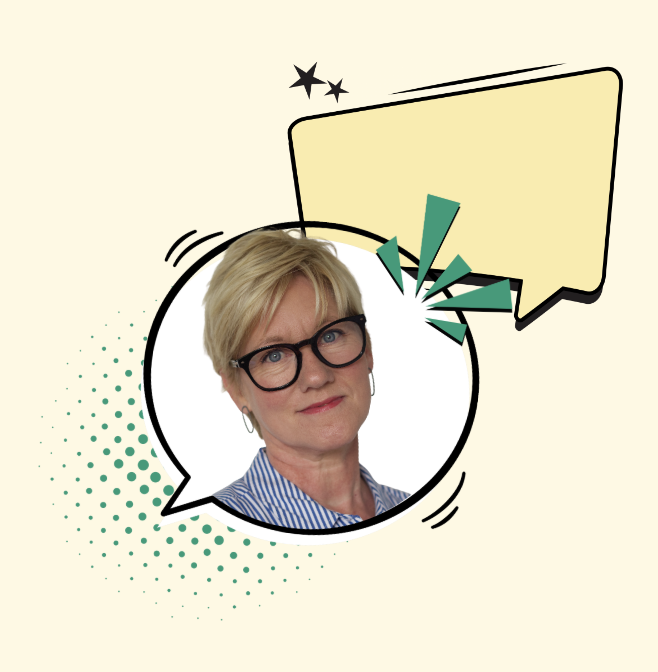
About Katja
Katja Eager is an education consultant, parent advocate and founder of The Bright Line, supporting families and educators to better understand gifted and neurodivergent children.
With more than 15 years of experience in gifted education in New Zealand, Katja has worked alongside parents, teachers and school leaders to improve identification, engagement, wellbeing and outcomes for children whose needs may not always be immediately understood.
She founded The Head Office, a specialist one-day-a-week programme for gifted children in Taranaki, which grew to support around 150 children each week and developed strong relationships with 42 local schools. Her work has also included professional learning for educators from early childhood through to secondary school.
Now based in Singapore, Katja is building connections with families, educators and schools across Singapore and New Zealand, bringing together her experience in gifted education, neurodiversity and parent advocacy.
Her approach is practical, strengths-based and grounded in a simple belief: when children are understood, valued and supported for who they are, they are far more able to thrive.